NASA Secures Patent for Next-Generation EUV Photon Sieve

The Innovation: A Step Beyond On September 1, 2026, a patent was officially issued to NASA for a revolutionary method of fabricating “binary-phase photon sieves.” A photon sieve is a flat, ultra-thin membrane covered in millions of mathematically positioned microscopic holes that acts as a lens, using diffraction to perfectly focus Extreme Ultraviolet (EUV) light …

Smallsat-compatible Space Debris Detection Lidar

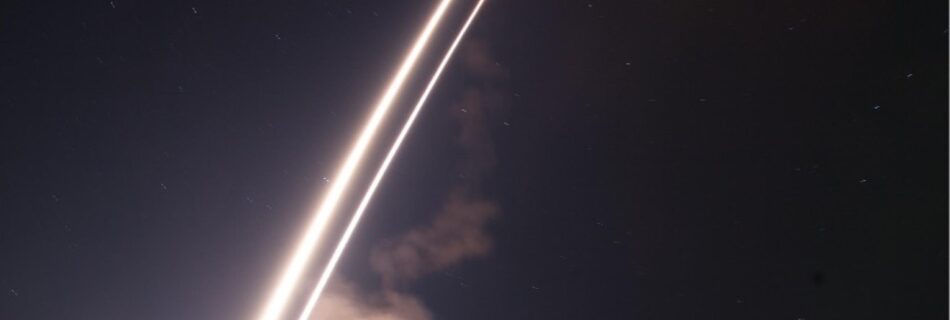
The Aerospace Corporation successfully completed hypervelocity testing of its space debris detection lidar instrument at NASA’s White Sands Test Facility in March 2026. This testing demonstrated the instrument’s ability to detect millimeter and sub-millimeter debris, ranging from 0.1 to 1 mm, traveling at low Earth orbital velocities between 4 and 7.2 km/s. These results, along …

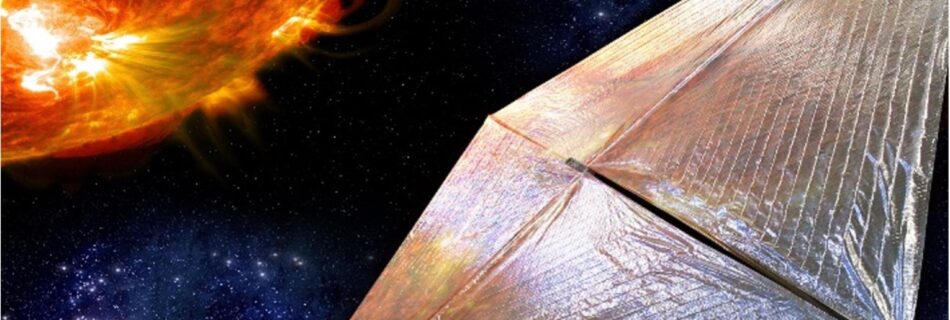
Solar Cruiser: Enabling new vistas for Heliophysics Science

To enable missions to reach novel and otherwise difficult or impossible destinations for observing the Sun, NASA selected the Solar Cruiser Technology Demonstration Mission of Opportunity to develop a 1653 m2 solar sail system for flight demonstration in 2025. Leveraging technology developments to enable new and groundbreaking science is an important Science Mission Directorate goal. Solar …

CHIMERA: A hybrid search coil and fluxgate magnetometer for small spacecraft missions

Magnetometers provide essential magnetic field measurements for solar-terrestrial and space physics research, for space exploration, and for monitoring space weather. Science missions have often needed a search coil magnetometer for high frequencies and a fluxgate magnetometer for the static field and low frequencies. Although one or both instruments have flown on a large percentage of …

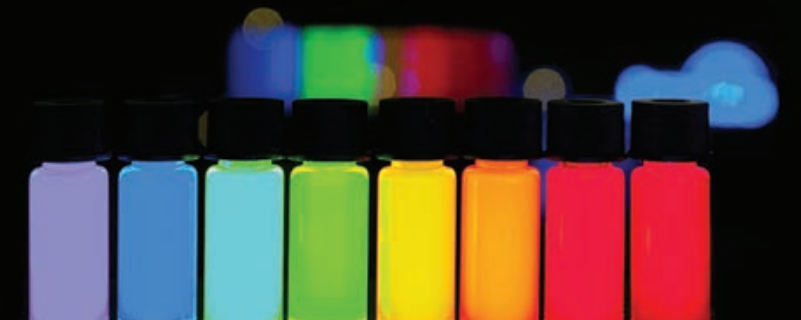
Vials of quantum dots glow in different colors under ultraviolet light. The colors of light emitted are determined by the nanoscale size and composition of the crystals in suspension. Image Credit: NASA / Mahmooda Sultana 

Spectroscopy through Quantum Dots

Miniaturizing our measurement devices has become more important over the years as our missions needed an increasing number of spacecraft to enable systems science. Launching many spacecrafts at once, affordably means smaller spacecraft and less room for our instruments.   Mahmooda Sultana, a Heliophysics Instrument Development for Science (H-TIDeS) principal investigator, has taken a novel approach …