
NASA’s Heliophysics Division continues to demonstrate the power of strategic technology infusion, leveraging investments in small missions to enable ambitious new science opportunities. A compelling example is the development progression of the Measuring Directivity to Determine Electron Anisotropy (MeDDEA) instrument from the Polarization And Directivity X-Ray Experiment (PADRE) CubeSat mission to the new Advanced Warning for Solar Energetic particles on the Moon (AWSEM) lunar instrument.
The PADRE mission, led by Principal Investigator Dr. Chris Moeckel of the University of California Berkeley, Space Sciences Laboratory, was selected in 2022 and launched successfully on June 23, 2025, aboard a 12U-XL CubeSat platform. PADRE was designed to investigate the directional distribution of solar flare accelerated electrons through complementary measurements of hard X-ray directivity and polarization.
At the heart of PADRE is MeDDEA, an innovative hard X-ray instrument developed at NASA’s Goddard Space Flight Center (GSFC) to constrain the directivity of solar energetic electrons. Unlike traditional hard X-ray imagers, MeDDEA operates without imaging grids and utilizes flight-spare detectors from the Solar Orbiter mission X-ray Spectrometer/Telescope provided by the French Alternative Energies and Atomic Energy Commission (CEA) at Saclay. This approach enables high-quality hard X-ray observations optimized for determining how solar flare electrons are distributed and accelerated in space.
PADRE has served as an exceptional technology maturation platform for MeDDEA. The instrument entered at Technology Readiness Level (TRL) 5 and, through development, environmental testing, spacecraft integration, and successful on-orbit operations, has now reached TRL 9, the highest level of technology maturity. All four MeDDEA detectors are operating on orbit and producing science data, providing direct validation of the instrument in its intended operational environment.
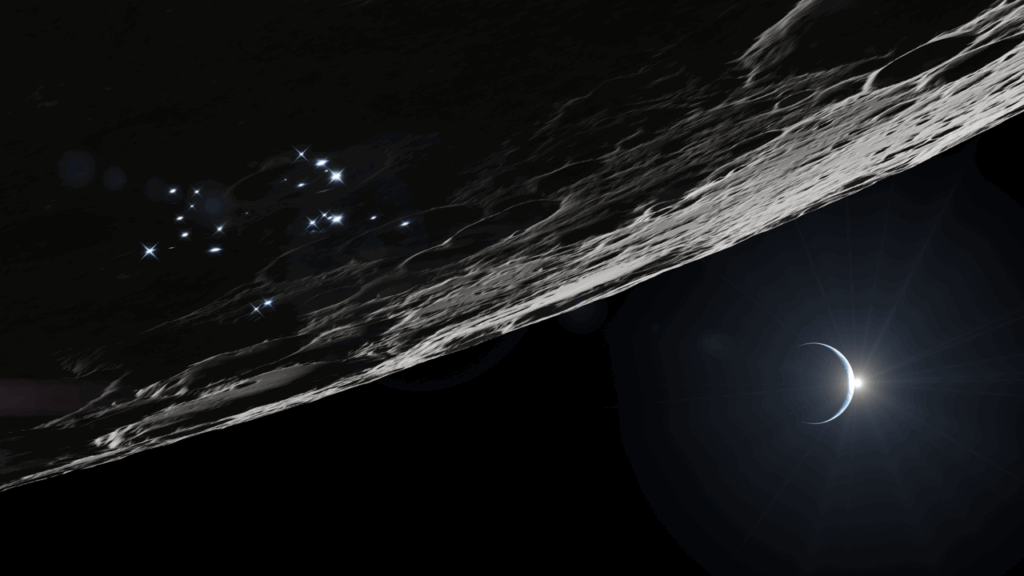
The flight experience gained through PADRE is now being leveraged for AWSEM, a new lunar surface instrument manifested on September 1, 2026. This project, led by Steven Christe of NASA’s GSFC, now faces an aggressive development schedule. AWSEM is manifested to fly on Northrop Grumman’s Lunar Infrastructure Demo 1 (LID-1), which is part of a mission series designed to rapidly establish a resilient power and data backbone for a sustained NASA Moon Base at the lunar South Pole. By leveraging repurposed hardware and interfaces from the Habitation and Logistics Outpost (HALO) program, it aims to accelerate development and quickly gather real-world surface performance data. With a planned flight-readiness date of end of 2027, the AWSEM team has only about a year to prepare the instrument and deliver hardware to be integrated onto the spacecraft.
AWSEM will build upon the proven MeDDEA architecture while extending its capabilities to survive the far more challenging lunar environment. Whereas PADRE operates in low Earth orbit, with regular sunlight and moderate thermal conditions, the lunar surface presents extreme temperature swings and prolonged periods of darkness. As a result, the team will update and harden the AWSEM version of MeDDEA to survive the lunar night, representing the next evolutionary step for the technology. This maturation path highlights how Heliophysics Division technology investments can reduce risk, shorten schedules, and improve mission confidence for future exploration missions.
From its position on the lunar surface, AWSEM will enable unique Heliophysics and lunar science investigations. The instrument is expected to observe solar flares and provide advanced warning of solar energetic particle events that can impact future lunar explorers and infrastructure. During lunar daytime operations, the instrument is designed to observe solar activity, while also taking advantage of the lunar environment to pursue new science opportunities. Project estimates indicate AWESEM could observe multiple significant solar flares and potentially make the first measurements of lunar fluorescence directly from the lunar surface, including detection of calcium and iron fluorescence lines. This provides a direct way to determine the elemental composition of the lunar surface.
The progression from PADRE to AWSEM exemplifies the value of NASA’s technology infusion strategy. What began as a promising concept was matured through flight on a smallsat mission, advancing MeDDEA from TRL 5 to TRL 9. Now, with performance demonstrated in space, the advances made possible by this instrument will support an entirely new class of lunar observations. This not only accelerates AWSEM development but maximizes the return on NASA’s original investment in PADRE, ensuring a successful Heliophysics technology continues to deliver science well beyond its initial mission.
Original Artwork (not created using AI): NASA/Christa Harmon
NASA Artificial Intelligence (AI) Usage Disclosure: This article was created using AI (ChatGSFC/Gemini 3.1 Pro) to summarize content from multiple sources. The resulting article was reviewed by the author.