

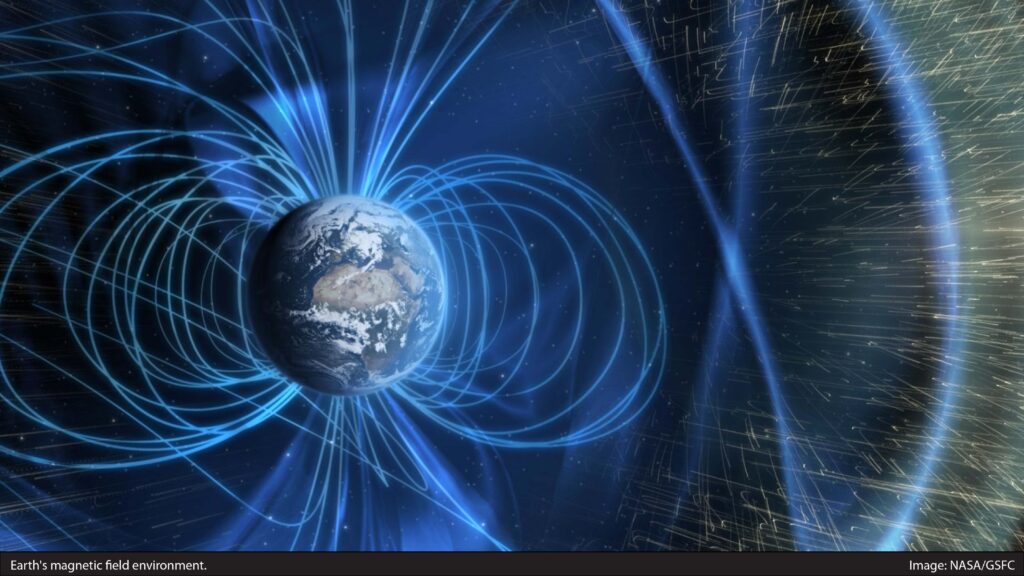
The Mini Magnetometer (MiniMag), developed by a team at the Laboratory for Atmospheric and Space Physics (LASP) at the University of Colorado, is a highly compact, single-sensor magnetometer using the Faraday effect to measure a broad range of magnetic fields – from static direct current to high-frequency alternating current.
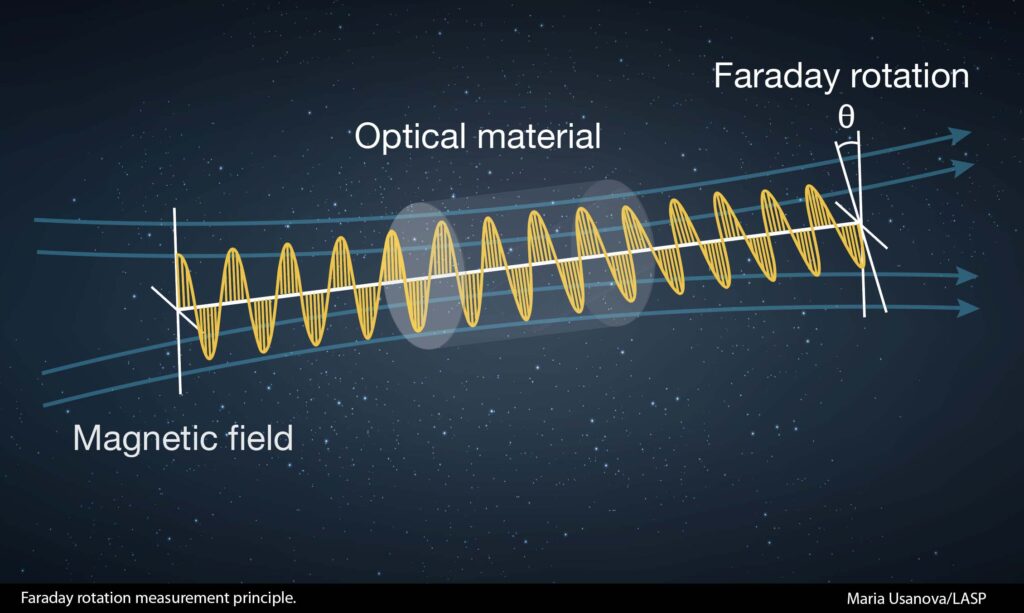
This new instrument concept combines capabilities traditionally provided by separate fluxgate and search-coil magnetometers, reducing instrument size, mass, and complexity.
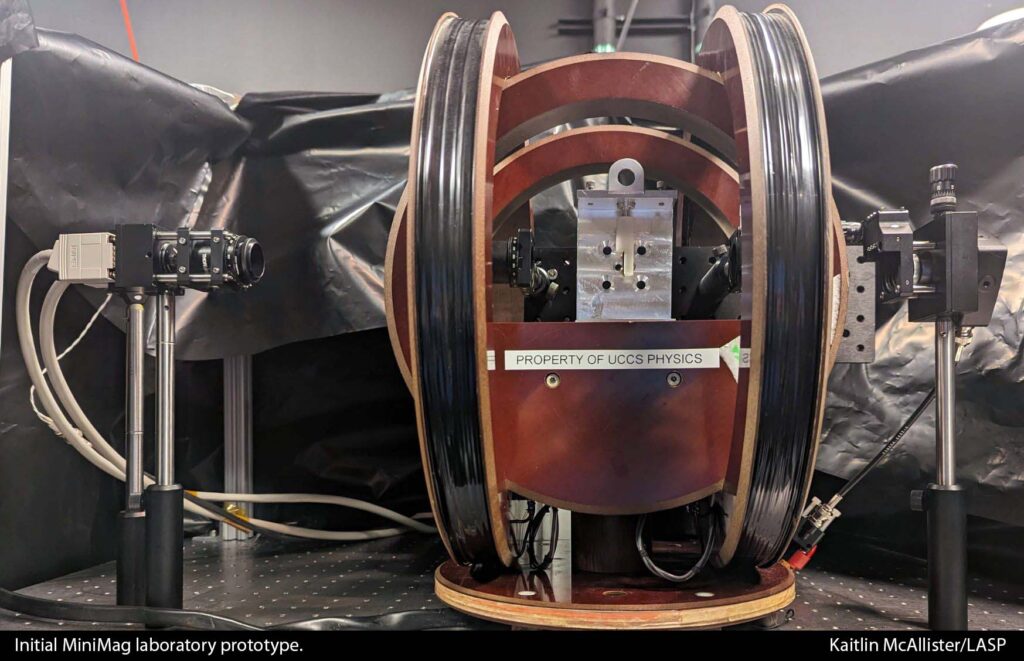
MiniMag (24-HTIDS24-0036), developed in part through the NASA Heliophysics Technology (HESTO) Heliophysics Technology and Instrument Development for Science (H-TIDeS) program under Principal Investigator Maria Usanova (LASP), was designed with CubeSats and small spacecraft constellations in mind, aiming to set a new standard for space weather and planetary environment measurements. Beyond its spaceflight applications, MiniMag’s miniaturized, room-temperature design delivers impressive sensitivity and opens exciting possibilities in medical technology. It could ultimately replace large, super-cooled superconducting quantum interference device (SQUID) machines, enabling wearable, highly accurate, and lower-cost magnetoencephalography (MEG) for brain scanning and magnetocardiography (MCG) for heart scans.
For more about MiniMag, see the LASP News article “NASA selects CU magnetometer for further development”. PI Usanova will also be providing an update about the MiniMag project at HESTO’s HELIOTECH and Orbital Flight Symposium August 31-September 4 at the Applied Physics Laboratory in Laurel, Maryland.
NASA Artificial Intelligence (AI) Usage Disclosure: This article was created with assistance from AI (ChatGSFC) to summarize content from multiple sources. The resulting article has been reviewed and edited by the author team.