
 HESTO is proud to announce that NASA has launched the Orbital Clarity Challenge, the sixth opportunity in the NASA TechLeap Prize series.
A collaborative effort between NASA’s Heliophysics Division, Flight Opportunities program, and Center of Excellence for Collaborative Innovation, this challenge seeks to advance orbital drag measurement for safer, more predictable satellite flight paths.
A single sensor for measuring atmospheric density in low Earth orbit (LEO) can run from $1 million to $10 million. At that price, few operators can justify carrying one — and models remain starved for data exactly where accuracy matters most. NASA invites applicants to propose low-cost, scalable approaches that enable proliferated measurements of density, pressure, or drag in LEO.
Up to four winners will each receive up to $500,000 to develop a flight-ready solution across three prize phases. NASA also intends to provide an opportunity for the winning team(s) to demonstrate their solution in orbit, at no cost.
Key Dates:
● Virtual Information Session: September 22, 2026, 1:00PM ET
● Registration Deadline: October 28, 2026, 5:00PM ET
● Submission Deadline: November 11, 2026, 5:00PM ET
Sign up for the Virtual Information Session to learn more about the Orbital Clarity Challenge.
Background
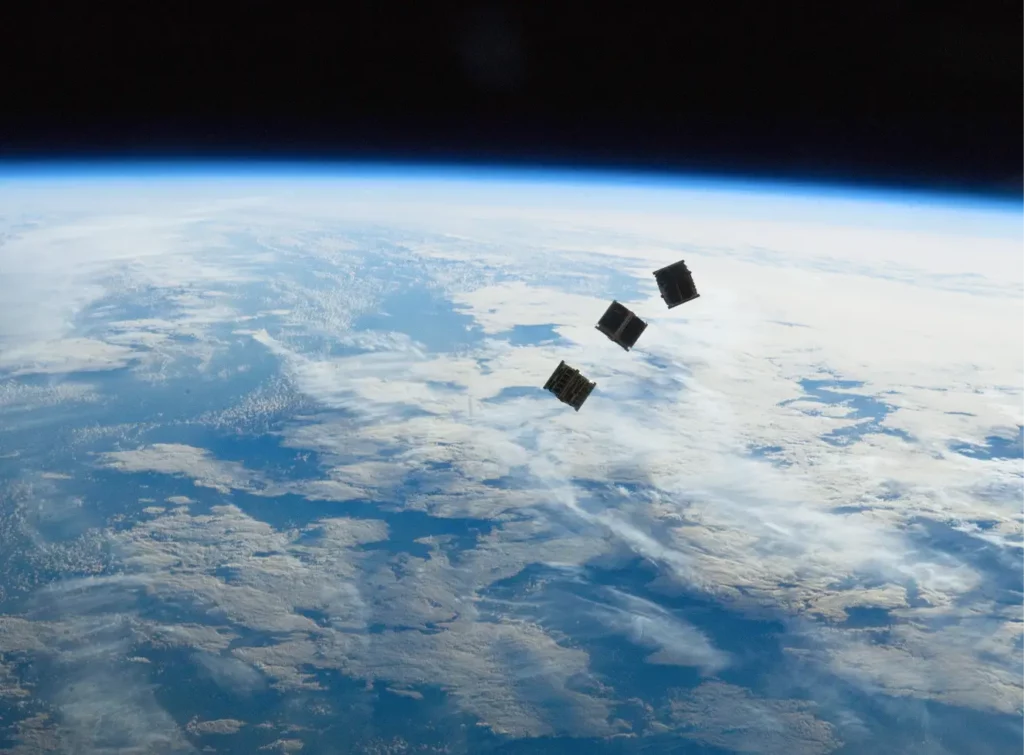
Most satellites operate within the thermosphere, the thin upper layer of the atmosphere where drag is highly variable and is measured too infrequently to gain an accurate reading. Because drag corresponds directly to atmospheric density — which shifts continuously with solar and geomagnetic activity — it is the single largest source of uncertainty in predicting a spacecraft’s orbit and trajectory. The operational costs are substantial. Satellite operators maneuver to avoid collisions that may never have posed a real threat and carry extra propellant as insurance against orbits decaying faster than expected.
The rapid growth of commercial satellites presents an opportunity for improvement. Thousands of spacecraft already fly through the very orbits where better insight is most needed, and each one is a potential platform for collecting data. To leverage these satellites, the Orbital Clarity Challenge calls for low-cost methods of measuring thermospheric density, pressure, or drag in LEO. NASA is seeking approaches that are inexpensive and scalable enough to be produced in quantity and flown as hosted payloads industry-wide. Deployed across satellite constellations, low-cost sensors of this kind could take continuous measurements from many points at once to deliver the global, low-latency coverage that current density models lack.
Technical Goals and Guidelines
The core goal of this challenge is low-cost measurement of thermospheric density in LEO, at a cost and form factor that allow measurements to proliferate across commercial satellite platforms. Thermospheric/neutral mass density is the lead measurand. Thermospheric pressure and drag acceleration are in scope as a means of determining density — including approaches that use the host spacecraft itself as a sensor of drag acceleration. Measurements of thermospheric/neutral composition (individual number density of major neutral species) are valued but not required. The technical guidelines describe what solutions are asked to measure, how well, and within what constraints.
Performance figures are target floors, not fixed requirements and describe the level of performance NASA believes would make a solution useful for thermospheric density specification and modeling. Applicants may propose a different target with justification — for example, a solution that trades some measurement performance for a substantial gain in cost or scalability may still be highly competitive. Learn more about the technical parameters on the Orbital Clarity Challenge’s Technical Guidelines page or download the submission form (PDF).