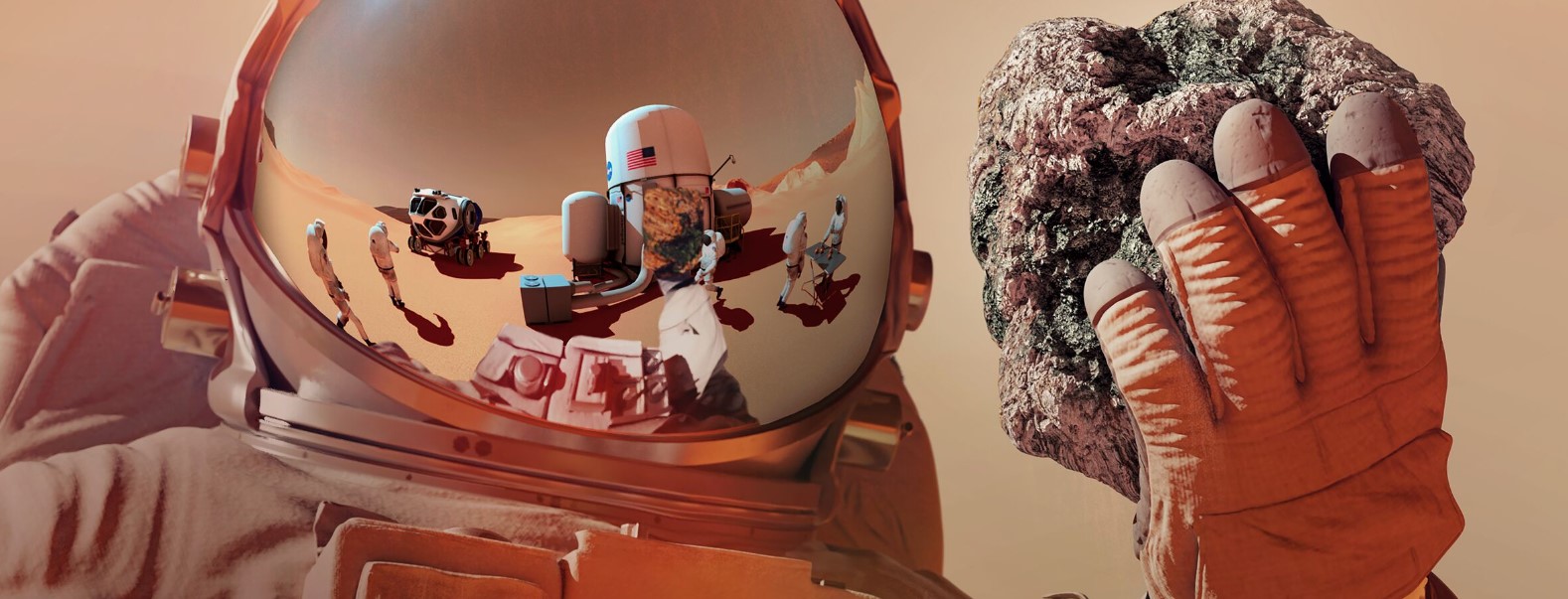
A new National Academies report establishes searching for evidence of existing or past life on Mars as the top science priority for the first human mission to the red planet, alongside 10 other key objectives that include critical space physics priorities such as characterizing radiation at key locations in crew habitats and sampling sites, determining what controls the onset and evolution of major dust storms that make Mars’ atmosphere highly variable, and understanding Mars’ water and CO2 cycles to reveal how they evolved over time. The report presents four distinct exploration campaigns, each comprising three missions with specific science goals—the highest-ranked campaign includes a 30-sol landing, cargo delivery, and 300-sol mission at a single site that could achieve all 11 science objectives, including comprehensive characterization of the Martian environment’s radiation and atmospheric dynamics. Co-chairs Linda T. Elkins-Tanton and Dava Newman emphasize that this historic achievement will place science at the center of Mars exploration, with space physics investigations playing a crucial role in understanding the planet’s atmospheric variability, radiation environment, and how these factors impact both crew safety and the potential for life. The report recommends that NASA include meteorological equipment and radiation sampling instruments in mission plans, return samples from every human mission, and establish recurring summits on human-robot-AI teaming to support these ambitious exploration goals.